UK data protection law has changed under the Data (Use and Access) Act 2025 (DUAA),…
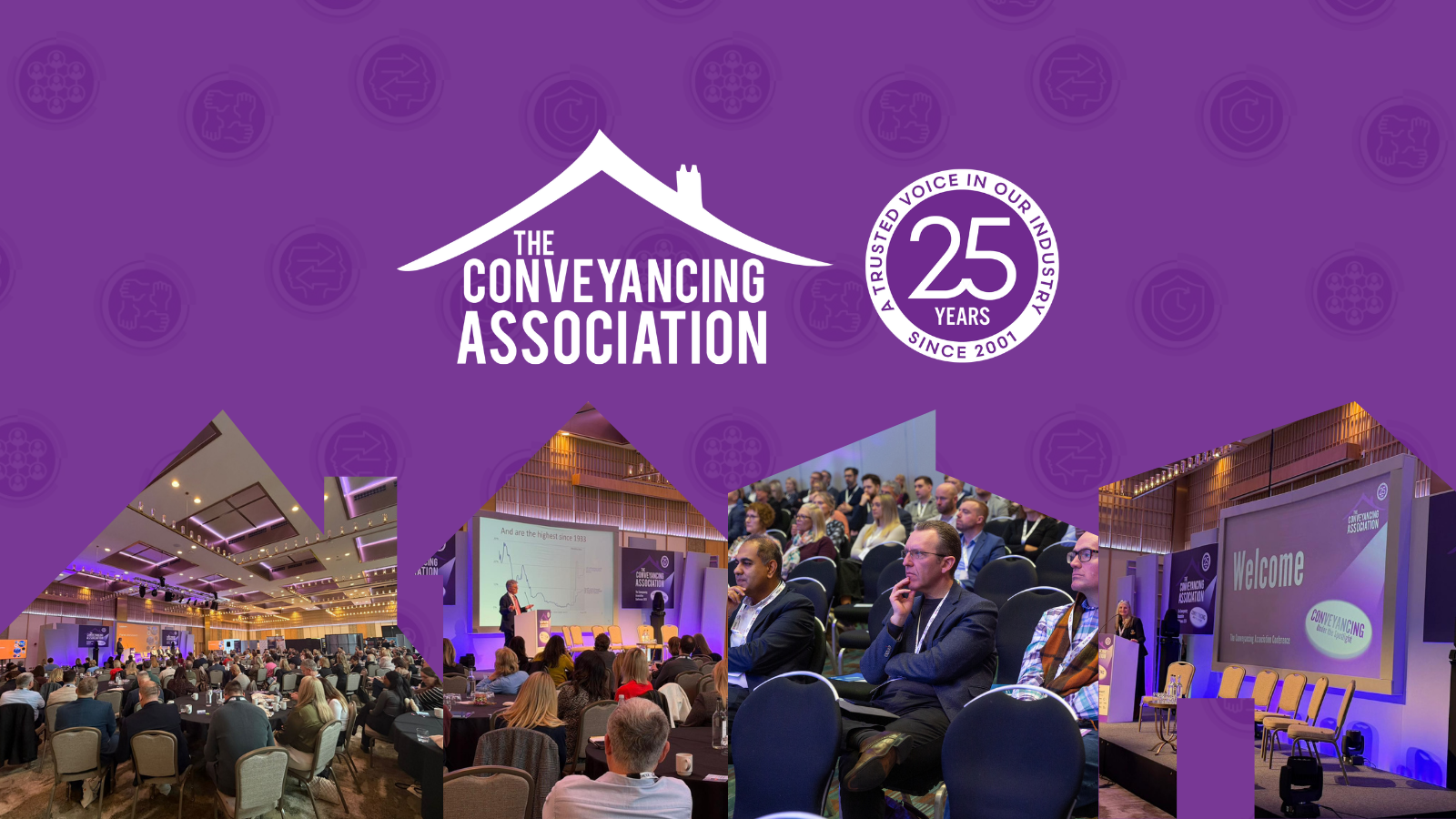
As the Conveyancing Association reaches its 25th year, we reflect on a milestone that sits at the heart of its story. It was built on a simple idea that remains just as relevant today: when conveyancers come together to share what works, challenge what does not, and speak with a clear, informed voice, the whole sector benefits, including the consumers who rely on the process at some of the most important moments of their lives.
In conversation with founding members David Hodgson and Eddie Goldsmith, the origins of the Association are strikingly familiar to anyone who has ever valued the quality of discussion that happens when peers are in a room together. The first meeting took place in London at the Park Lane Hilton in the mid 1990s, when a small group of firms involved in emerging volume models were beginning to face a new set of operational and professional realities. The meeting was convened by Kevin Doolan of Eversheds, who was candid about feeling isolated inside a large firm where this kind of work was not always understood. Sitting around the table with him were representatives from across the profession, including David Duckworth (Walker Morris), Andy Tubbs and Richard Hinton (Shoosmiths), Lucci Dammone (Hammond Suddards), Richard Atkins (Taylor Walton), Anthony Ruane (Addleshaw Booth), Eddie Goldsmith (Goldsmith Williams), Peter Armstrong (McKeags), Steven Gold (Golds), Roger Wilson (Countrywide), Stanley Bland and David Hodgson (Blacks). While the firms varied in size, geography and focus, the shared challenges were immediately recognisable, particularly the need to improve processes in ways that ultimately delivered a better experience for clients.
That first gathering became the Direct Conveyancing Association. It was informal and deliberately so. There was no subscription, no fixed agenda beyond sharing knowledge, and no expectation that competitors could not learn from one another. In fact, one of the earliest lessons was that the value of the group increased when members were less guarded, not more. If you left a meeting having learned something you could apply the next day, the time had been well spent, whether that was improving efficiency, reducing friction or delivering clearer outcomes for consumers.
Those early conversations were about much more than volume remortgage work. They were about a model of conveyancing that was taking shape and would soon become recognised across the profession: teams built to handle workflow, investment in systems, and a focus on accessibility for clients whose expectations were shifting rapidly. In the years that followed, volume conveyancing expanded well beyond remortgaging into full sales and purchases, and the Association’s membership and purpose evolved with it, always with an eye on improving the overall conveyancing journey.
When Eddie Goldsmith became Chair, the decision to move from the Direct Conveyancing Association to the Conveyancing Association in 2001 reflected a conscious shift. The aim was to be more inclusive, to reach a wider constituency of firms building serious conveyancing operations, and to move beyond being seen as a small dining club. By that point, as Hodgson and Goldsmith describe it, the Association had “grown legs”. It was ready to become a recognised, credible representative body for conveyancing, capable of influencing change that benefited both practitioners and the clients they serve.
That credibility is now one of the Association’s defining strengths. Both founders return to the same point: for too long, conveyancing lacked a focused voice that could engage meaningfully with government, lenders and regulators at speed and with authority. The Association’s role has been to represent the reality of conveyancing practice, informed by those delivering it day in, day out, and to ensure the profession is part of the conversation when change is proposed, particularly where reform can lead to a smoother, fairer and more transparent experience for consumers.
The impact of that work is clear in the Association’s long-standing focus on leasehold. The CA spotted early how inconsistent enquiry packs, duplicated questions and unclear responses were driving delay and additional cost across transactions, issues that were felt most acutely by buyers and sellers. By working with stakeholders to create a single, standard Leasehold Property Enquiries form, the LPE1 was born, designed to work for conveyancers, lenders, landlords and managing agents alike. Making it freely available was central, and the result is an industry tool used in the majority of relevant transactions today. As leasehold challenges evolved, the Association continued to respond, including work on the FME1 for managed freeholds and sustained lobbying on fees, timescales and unnecessary costs that do not add value to the consumer.
Much of this progress has been driven through the Association’s sustained lobbying and engagement work, led by Beth Rudolf, the CA’s Director of Delivery. Through consistent representation, detailed policy work and long term relationships with government, regulators and stakeholders, Beth has ensured that conveyancing issues, particularly around leasehold reform, have been properly understood and acted upon. The changes seen in this area reflect years of focused effort and underline the importance of having a dedicated, informed voice at the table, not only for members but for the benefit of consumers navigating complex property transactions.
Just as importantly, the Association has stayed close to the day-to-day risks and realities of running conveyancing operations. The profession has had to adapt to changing consumer behaviour, the rapid acceleration of technology and the rising threat of cyber crime. The CA’s focus on protocols, guidance and education has been a practical expression of the same principle that underpinned the earliest meetings: good practice spreads faster when peers share it openly, helping raise standards across the sector and improving outcomes for clients. For this reason, all protocols and guidance is available for free on the Association’s website to every conveyancer, whether a member or not.
When asked what has mattered most over 25 years, both founders return to something that will resonate with anyone in the room at the Conference. There is no substitute for being able to sit with peers who understand the work, the pressures and the pace, and to come away with insight you can apply. The Association has been at its best when it has created that space consistently, while also using its collective experience to influence the wider system in ways that benefit both practitioners and consumers.
Looking ahead, both Eddie and David are clear that there is no finish line. Conveyancing is a dynamic industry. Digital conveyancing continues to develop, new risks and opportunities are emerging, and expectations around speed, transparency and service keep shifting. There will always be a need for an organisation that can bring the profession together, support members through change, and help ensure the conveyancing experience continues to improve for those at the centre of it: the consumer.
This anniversary is a moment to reflect on what has been built since those early meetings in London, but it is also a reminder of why the Association exists. The CA was created so conveyancers could learn from each other, improve how the process works, and have a voice that is listened to. Twenty five years on, that purpose remains as relevant as ever.
Related Posts